
Design the experience first. Then build up.
Goal first. Then the experience.
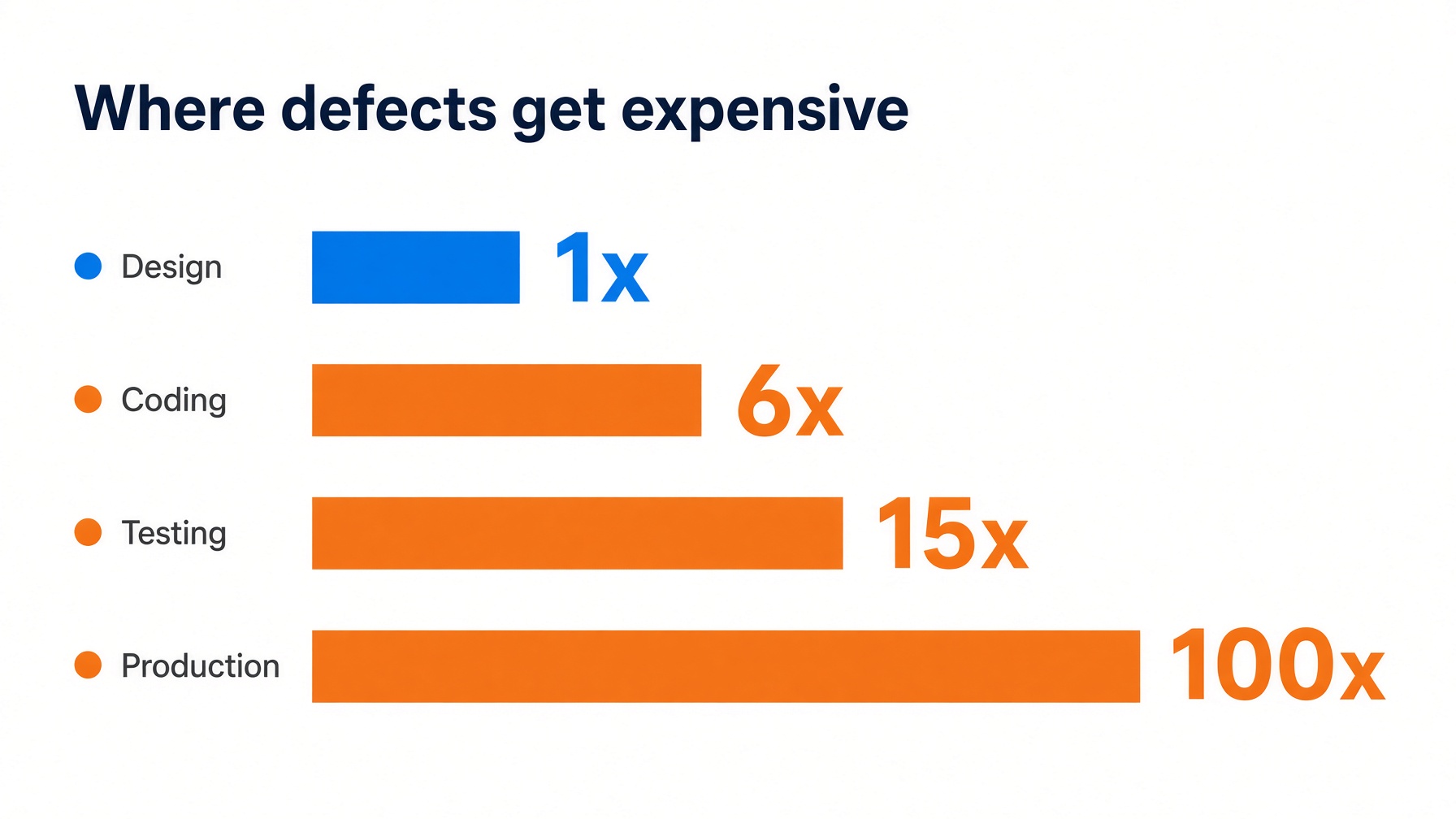
Most teams start in the middle — a stack, a backlog, and hope. We start with the goal and the experience a person should have. Then the UI. Then the model. That is how you stop paying 100× to fix a product you never designed.
Starting in the middle is why software gets expensive
A defect found in production can cost on the order of 100× more* than one caught in design (IBM / McConnell). Requirements misses that reach the field have been measured at 50–200×* (Boehm). Sprint ceremonies do not cancel that math if you still discover the real product in QA.

Design Down
Goal first. Then the experience. Then the UI. Then the data model and services. If the experience is wrong, a perfect API is still a failure — just an expensive one.
Typical process inverts this: pick a stack, open tickets, discover the product in UAT. That is the 100× tax.
Develop Up
Build from reusable foundations upward. Plan for validation and maintenance before you pour concrete. You keep software you can run, not a demo you rewrite in two quarters.
People system: Assess → Evolve → Engage
Process without a people system is theater. We assess the team you have, evolve skills against the work, and engage them on projects with the same Character Sheet visibility we use for Ultra Agents.
Two ways to get the process
We teach your team
Enroll a developer → · Train the trainer →
We run it for you
Request a conversation →
Stop paying the 100× tax
If the real product keeps showing up in QA, this is the process. Tell us three times that work and we will confirm one.
Notes
* Relative cost to fix defects later in the lifecycle: IBM Systems Sciences Institute (often summarized as ~100× in production vs design) and Boehm on requirements defects reaching the field (50–200×). McConnell discusses the same curve.
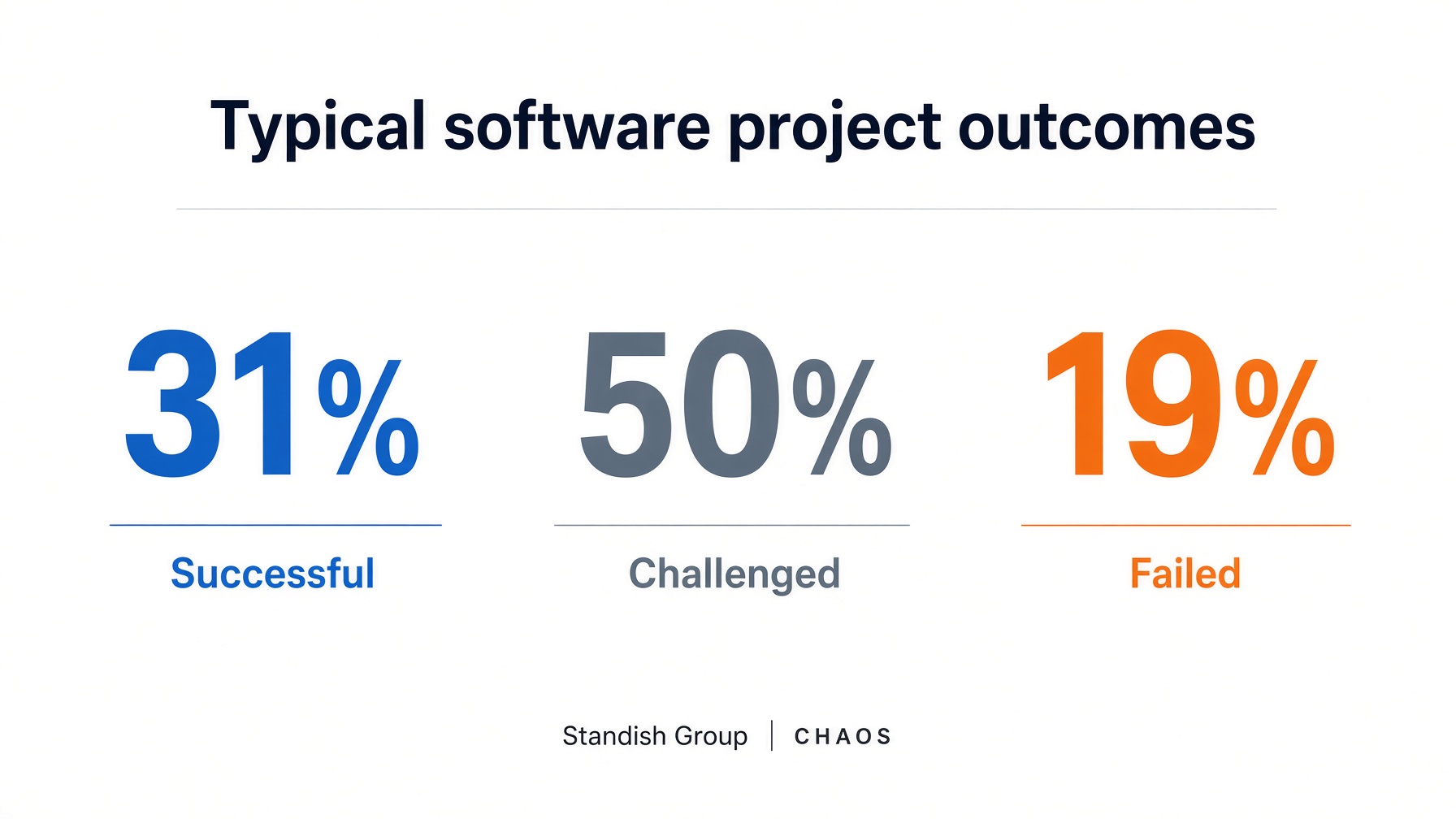
* Standish Group CHAOS Report: about 31% successful, 50% challenged, 19% failed.
Figures are third-party published estimates, not guarantees of DEVUPP results. See Disclaimers.